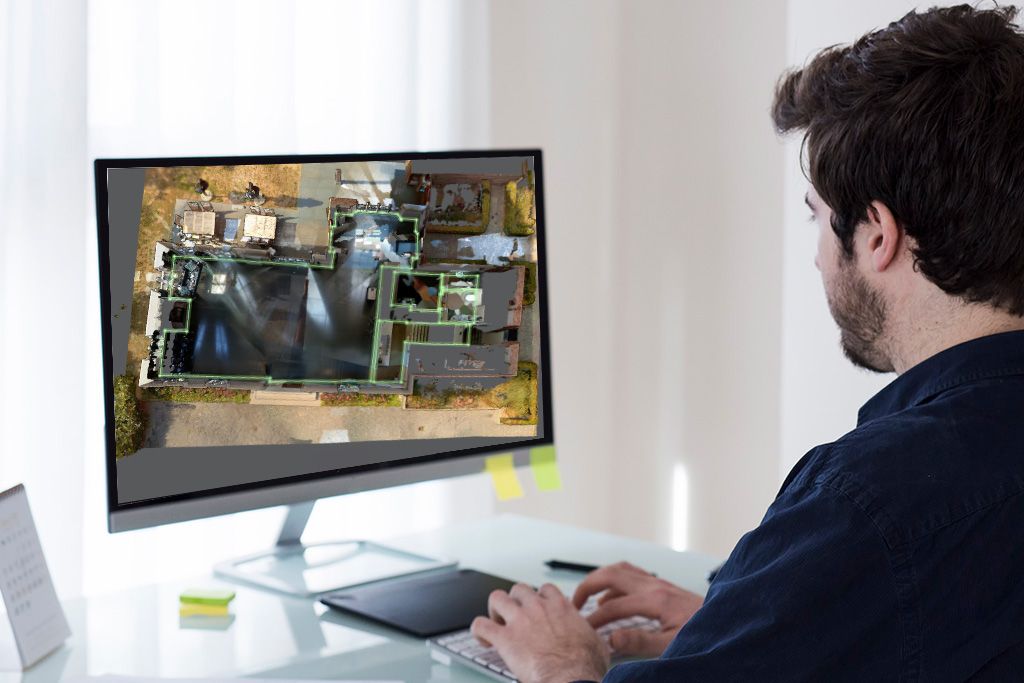
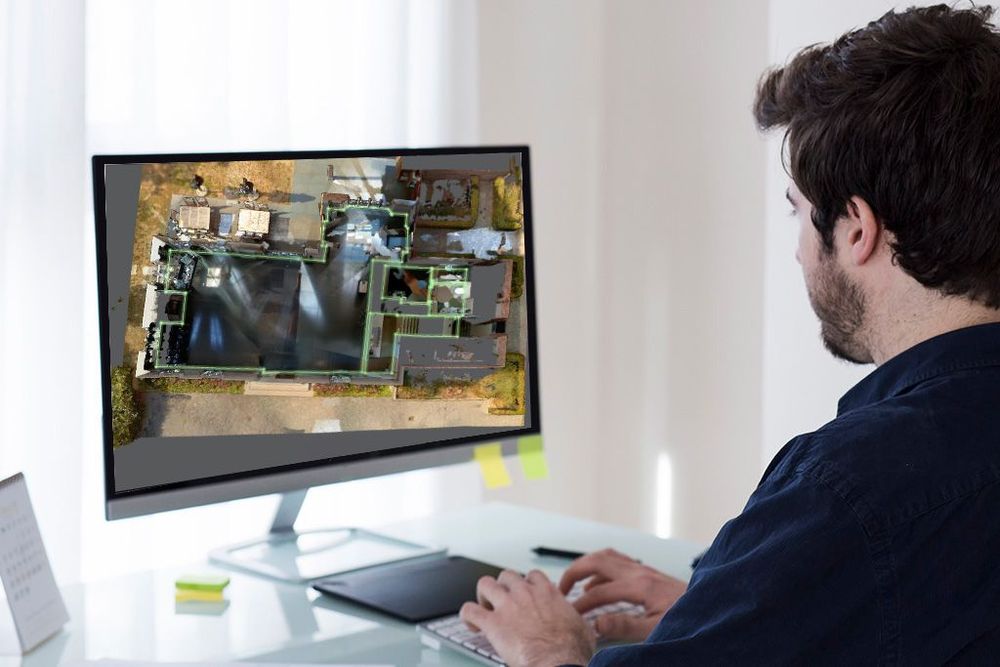
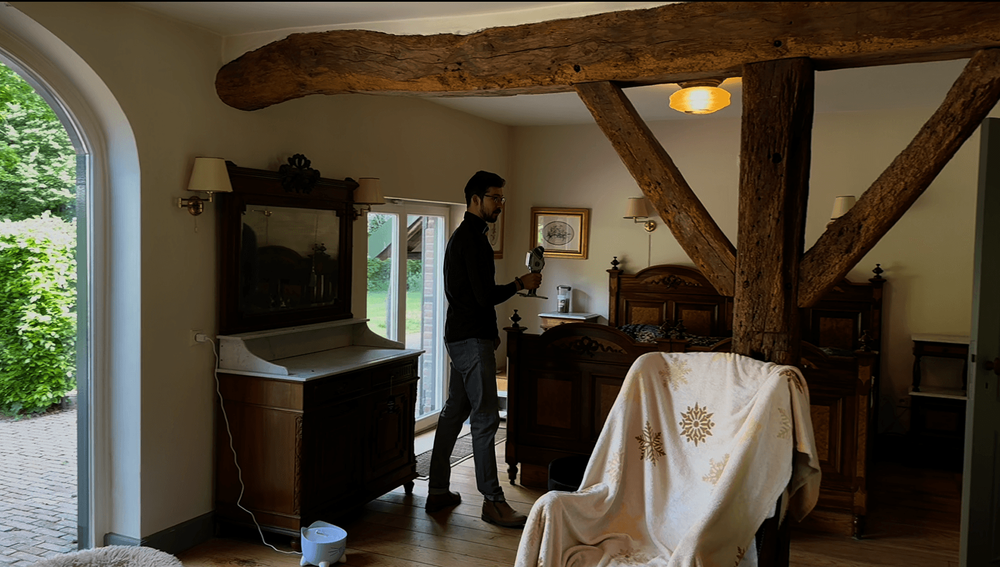
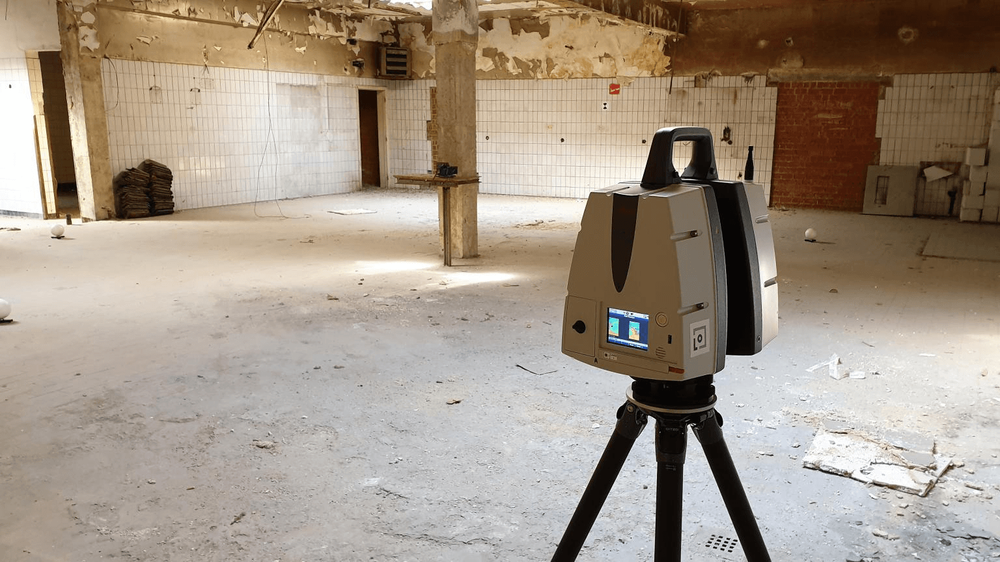
Trajectory processing in SLAM-based scanning refers to the digital processing of scan data that is captured while the scanner moves through an environment.
Unlike static scanning, mobile and SLAM-based scanning collect data continuously along a path. As the scanner moves, its position and orientation change over time, and these changes directly influence how individual measurements are placed in space. Trajectory processing reconstructs this movement so that all captured data can be positioned correctly relative to each other.
The purpose of trajectory processing is to translate movement-based capture into a coherent spatial dataset. By interpreting how the scanner moved through the environment, the processing step aligns the recorded geometry into a consistent point cloud that represents the scanned space as a whole.
Because mobile scanning depends on movement, trajectory processing plays a central role in determining the overall quality, consistency and usability of SLAM-based point clouds.